Fill dirt in one paragraph
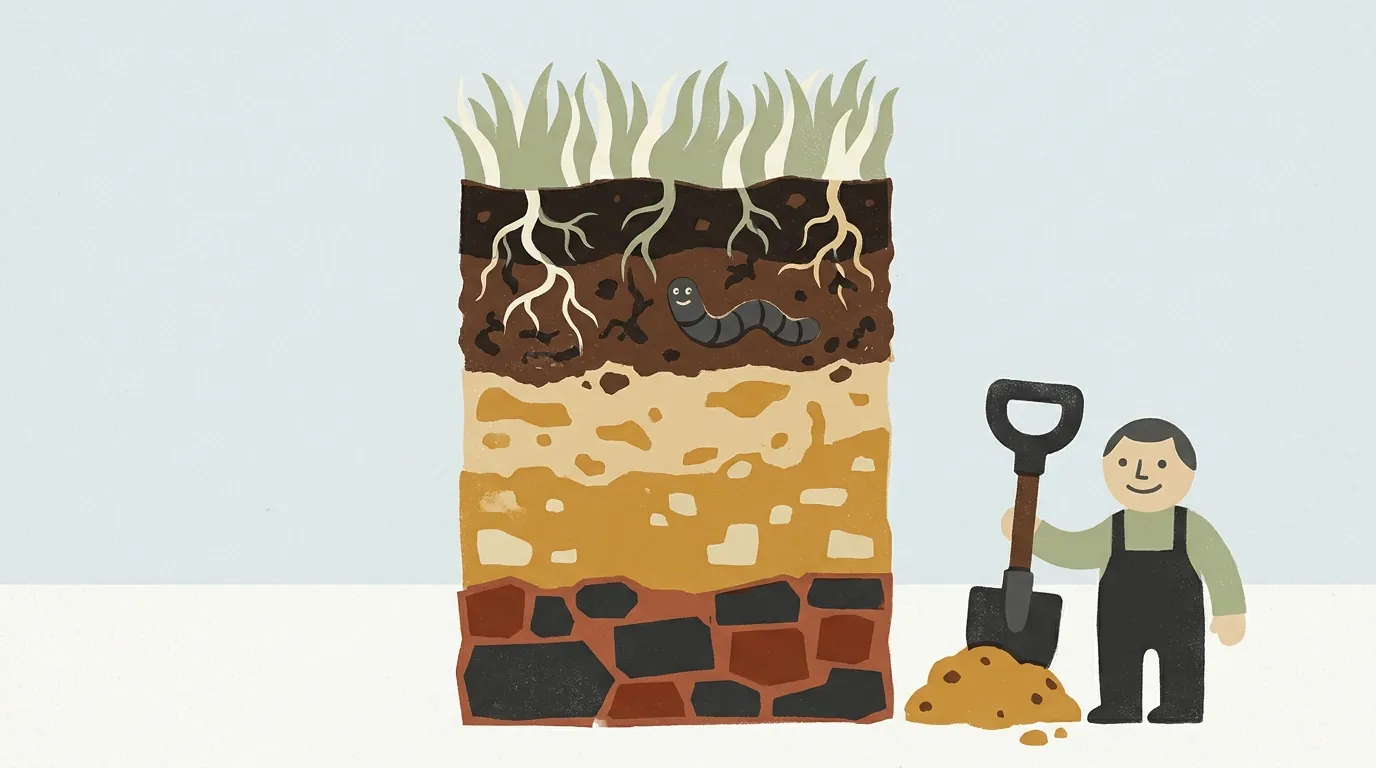
Dig down through a lawn and the dark, crumbly layer at the top is topsoil: the part with roots, worms and decayed organic matter. Below that is subsoil, usually lighter in color, denser and mostly mineral (sand, silt and clay). When subsoil is dug out on one job and used to fill a low spot on another, it is sold as fill dirt. Because there is little organic matter to rot away, a well-compacted fill stays where you put it, which is exactly what you want under a patio, a shed or a raised section of yard.
What makes fill “clean”?
“Clean fill” means soil and nothing else. When you buy or accept fill, check for:
- Debris. Concrete chunks, brick, asphalt, metal, plastic or trash.
- Organic matter. Roots, stumps, sod and wood rot over time and leave voids that sink.
- Contamination. Oily smells, odd colors or a source near fuel tanks, industrial sites or old dumps are red flags.
- Large rocks. A few stones are normal in unscreened fill; lots of big rocks make spreading and compaction harder.
Some states and towns have their own definitions and rules for clean fill, especially for large quantities. If you are filling near wetlands or streams, or bringing in a lot of fill, check what your local rules require.
Types of fill dirt
| Type | What it is | Good for |
|---|---|---|
| Unscreened fill | Dirt as it came out of the ground, rocks and clumps included | Filling large holes and low areas where finish does not matter |
| Screened fill | Fill passed through a screen to remove rocks and clumps | Easier spreading and grading, top layers under topsoil |
| Sandy fill | Fill with a lot of sand | Drains well, compacts easily; can wash out on slopes |
| Clay fill | Fill with a lot of clay | Sheds water, useful for sloping soil away from a house; sticky when wet, can crack when dry |
| Structural or engineered fill | Fill made to a specification and compacted in layers, often tested | Under buildings, slabs and driveways when an engineer or code calls for it |
Types of dirt by texture
Soil scientists describe dirt by how much sand, silt and clay it contains:
- Sandy soil. Gritty, drains fast, does not hold nutrients well. Compacts easily with water.
- Silty soil. Smooth and floury when dry, slippery when wet. Can erode easily.
- Clay soil. Sticky and plastic when wet, hard when dry. Holds water and swells and shrinks with moisture.
- Loam. A mix of sand, silt and clay with organic matter. The best texture for growing.
- Topsoil and subsoil. These describe the layer, not the texture: topsoil is the upper layer with organic matter; subsoil is below it.
A quick home test: squeeze a damp handful. Sandy soil falls apart, clay holds a shape and feels sticky, and loam holds together loosely and crumbles when poked.
Fill dirt vs topsoil
| Fill dirt | Topsoil | |
|---|---|---|
| Comes from | Subsoil, below the top layer | The top few inches to a foot of ground |
| Organic matter | Little | More, which is why it is darker |
| Compacts and stays put | Yes, when placed in layers | Settles more as organic matter breaks down |
| Grows plants | Poorly | Well |
| Typical use | Raising grade, filling holes, building up slopes and pads | Lawns, beds and the final layer over fill |
| Cost | Usually lower | Usually higher |
Most fill jobs that end in lawn use both: compacted fill for the bulk, then a cap of topsoil about 4 to 6 inches thick. Work out the fill with the fill dirt calculator, and subtract the topsoil depth from the total so you do not over-order fill.
Fill dirt, sand or gravel?
- Fill dirt for general filling and raising ground.
- Sand where drainage matters or where a smooth bed is needed, such as around pipes or under an above-ground pool. See the sand calculator.
- Gravel or crushed stone where water must pass through freely, or as a firm base under driveways and patios.
Rules for fill vary by place. For anything structural, near water, or larger than a typical yard project, check with your local building or environmental office before you bring fill in.
Questions people ask
- What is clean fill dirt?
- Fill dirt that is just soil: no trash, concrete, asphalt, wood, roots or other debris, and no chemical contamination. Many local rules also use the term for fill that can be accepted at a site without special handling.
- What is the difference between fill dirt and topsoil?
- Topsoil is the darker top layer with organic matter, where plants grow. Fill dirt is the subsoil below it, mostly mineral with little organic matter. Fill compacts and stays put; topsoil is for planting.
- Can grass grow in fill dirt?
- Poorly on its own. Fill dirt has few nutrients and can be compacted hard. Cover it with about 4 to 6 inches of topsoil before seeding or laying sod.
- What are the main types of dirt?
- Soils are usually described by their mix of sand, silt and clay. Sandy soil drains fast, clay soil holds water and is sticky when wet, silt is smooth and fine, and loam is a balanced mix. Topsoil and subsoil describe the layer the dirt came from.
- Is fill dirt the same as fill sand?
- No. Fill sand is sand used as fill. It drains well and compacts easily with water, which suits some jobs like bedding pipes or filling under slabs, but it washes away more easily on slopes.