How to calculate arena sand
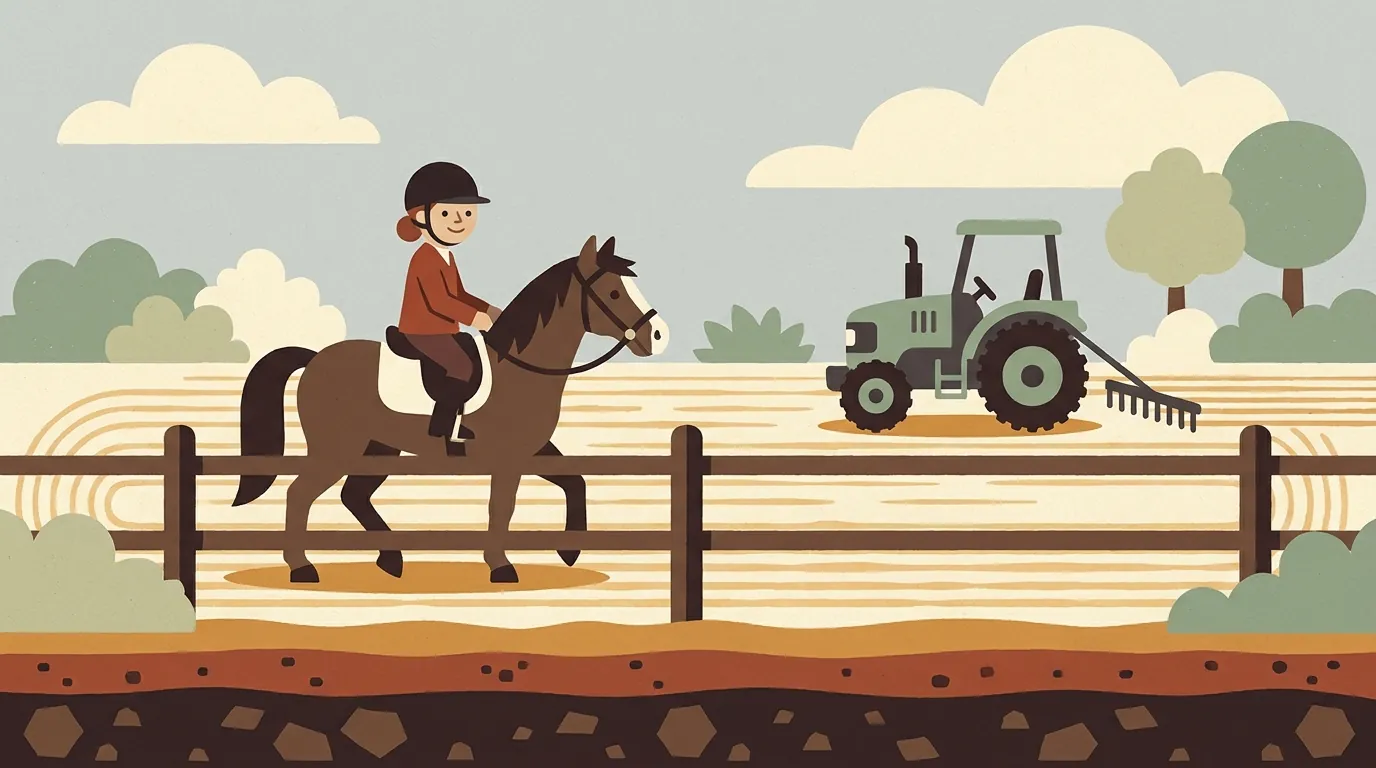
cubic yards = length × width × (depth in inches ÷ 12) ÷ 27
Worked example: a 60 × 120 ft riding arena, 3 inches of sand.
- 60 × 120 = 7,200 sq ft
- × 0.25 ft = 1,800 cubic feet ÷ 27 = 66.7 cubic yards
- Plus 10%: 73.3 cubic yards
- × about 1.35 tons = about 99 tons of dry sand
- In about 14-yard tandem loads: 5.2, so 6 loads, though haulers often carry fewer yards of heavy sand per truck, so it may be more
Many arena owners add sand in stages: put down less than the target, ride on it for a while, then top up. That avoids ending up too deep, which is harder to fix.
Arena sand by size and depth
Measured cubic yards, before any allowance:
| Arena size | 2 in | 3 in | 4 in |
|---|---|---|---|
| 60 × 120 ft | 44.4 | 66.7 | 88.9 |
| 66 × 132 ft (about 20 × 40 m) | 53.8 | 80.7 | 107.6 |
| 66 × 198 ft (about 20 × 60 m) | 80.7 | 121.0 | 161.3 |
| 100 × 200 ft | 123.5 | 185.2 | 246.9 |
| 70 ft round pen | 23.8 | 35.6 | 47.5 |
Multiply by about 1.35 for tons of dry sand.
Footing depth for horse arenas
Arena footing is the loose top layer the horse works on. Under it sits a firm, compacted base that drains, and the base matters as much as the sand. Typical practice:
- A few inches of sand, often about 2 to 4 inches, depending on the sand, the discipline and the base.
- Shallower footing is firmer; deeper footing is softer but more tiring and can strain soft tissues if it is too deep and loose.
- Keep it even. Regular dragging moves sand back from the rail and out of the low spots.
These are general starting points, not veterinary or engineering advice. Talk to your arena builder, trainer or farrier before choosing a depth.
Volleyball courts
The playing court in beach volleyball is 8 × 16 meters (about 26 × 52 ft), with a free zone around it. Backyard courts are often built about 30 × 60 ft to leave some run-off room.
| Court area | 12 in deep | 16 in deep | 18 in deep |
|---|---|---|---|
| 26 × 52 ft (court only) | 50.1 yd³ | 66.8 yd³ | 75.1 yd³ |
| 30 × 60 ft | 66.7 yd³ | 88.9 yd³ | 100.0 yd³ |
| 40 × 70 ft | 103.7 yd³ | 138.3 yd³ | 155.6 yd³ |
Official beach volleyball rules call for at least 40 cm (about 16 inches) of sand. Home courts are often around 12 inches. Fine, washed sand without stones is kindest on bare feet; many people use washed mason sand or sand sold for courts.
Ordering arena sand
- Get samples and look at them wet and dry. Dusty, silty sand causes problems for horses and riders.
- Ask for a gradation or a description of what the sand is washed and screened for.
- Ask how it is sold: by the ton or the yard. Wet sand weighs more per yard. The sand weight calculator converts between the two.
- Plan truck access to the arena. A full tandem load of sand is heavy enough to rut a soft base, so tip near the edge and spread with a tractor or loader.
Sand weights, depths and truck capacities here are typical planning figures. Confirm the sand type and depth with your arena builder, and the load size and weight with your hauler.
Questions people ask
- How much sand do I need for a horse arena?
- Multiply arena length × width × footing depth in feet and divide by 27 for cubic yards. A 60 × 120 ft arena with 3 inches of sand needs about 67 cubic yards, or about 73 with 10 percent extra, roughly 99 tons of dry sand.
- How deep should sand be in a horse arena?
- Arena footing is commonly a few inches of sand, often around 2 to 4 inches, over a firm, compacted base. Too deep and loose is hard work for horses. Ask your arena builder or trainer what suits your discipline and sand.
- How much sand do I need for a volleyball court?
- Official beach volleyball rules call for at least 40 cm, about 16 inches, of sand. Backyard courts are often built with about 12 inches. A 30 × 60 ft court at 12 inches is about 67 cubic yards before any allowance.
- How many tons of sand for an arena?
- Cubic yards × about 1.35 for dry sand. Sand delivered wet weighs more per yard, so a ton price buys less volume.
- What kind of sand is best for an arena?
- Washed sand with little silt or clay, which reduces dust and drainage problems. Arena builders often look for medium to coarse, somewhat angular grains that hold together for grip. Look at samples before ordering a full arena's worth.